From the Forest to the Artwork
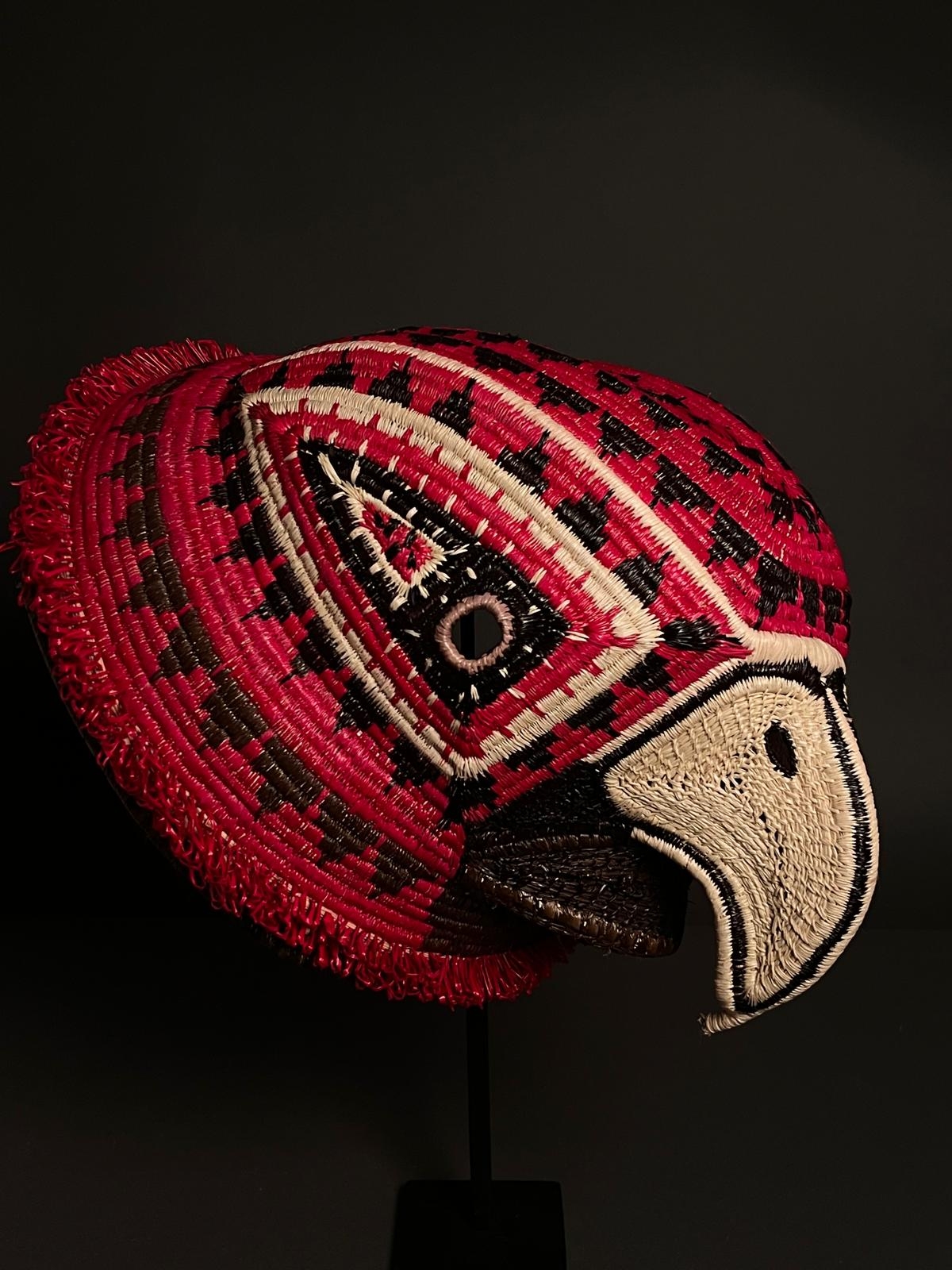
Originally, these sculptures, woven and embroidered by women at the request of the jaibaná, the shaman, were created to accompany healing rituals. The women of the patient’s family would make them at the shaman’s request, according to the symptoms of the illness.
The mask had a specific purpose. Once it had been used during the ritual, it was believed to have “danced” and to have become charged. It could no longer be handled as an ordinary object and had to be destroyed by fire.
The original masks were therefore made to disappear.
This is what makes their history so unique. There are no ancient masks preserved today, because their disappearance was itself part of the ritual.
The contemporary pieces we present are therefore the result of a profound transformation: what was once an ephemeral ritual object has become a work of art intended to be preserved.
A Shared Language, a Personal Creation
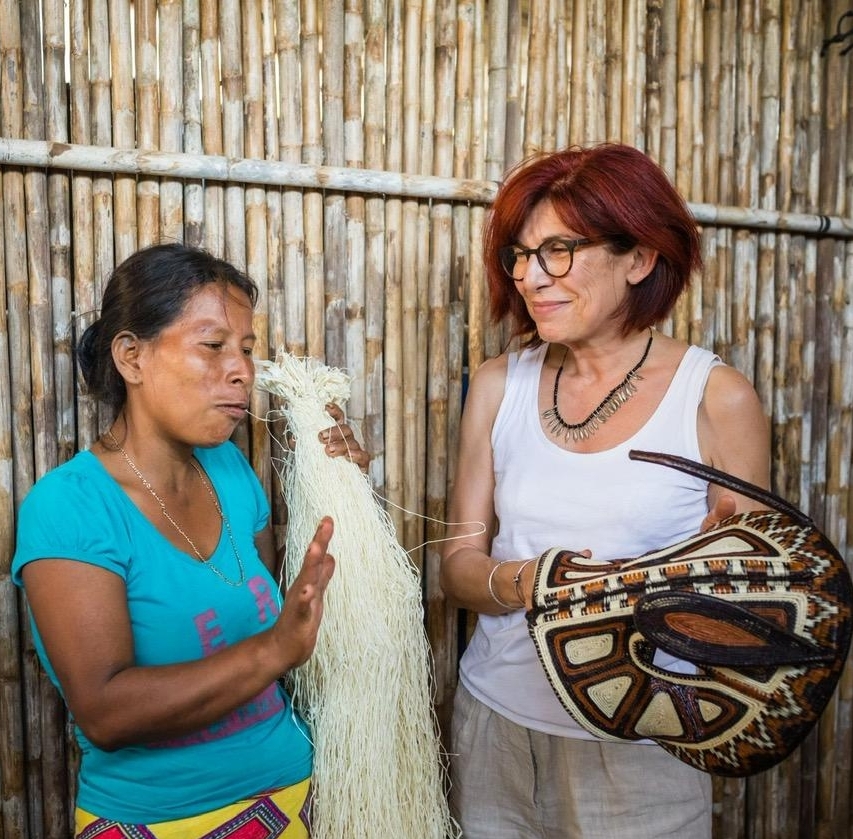
All the women who master this technique know the gestures, materials and motifs passed down within their communities. But sharing a craft does not mean creating identical works.
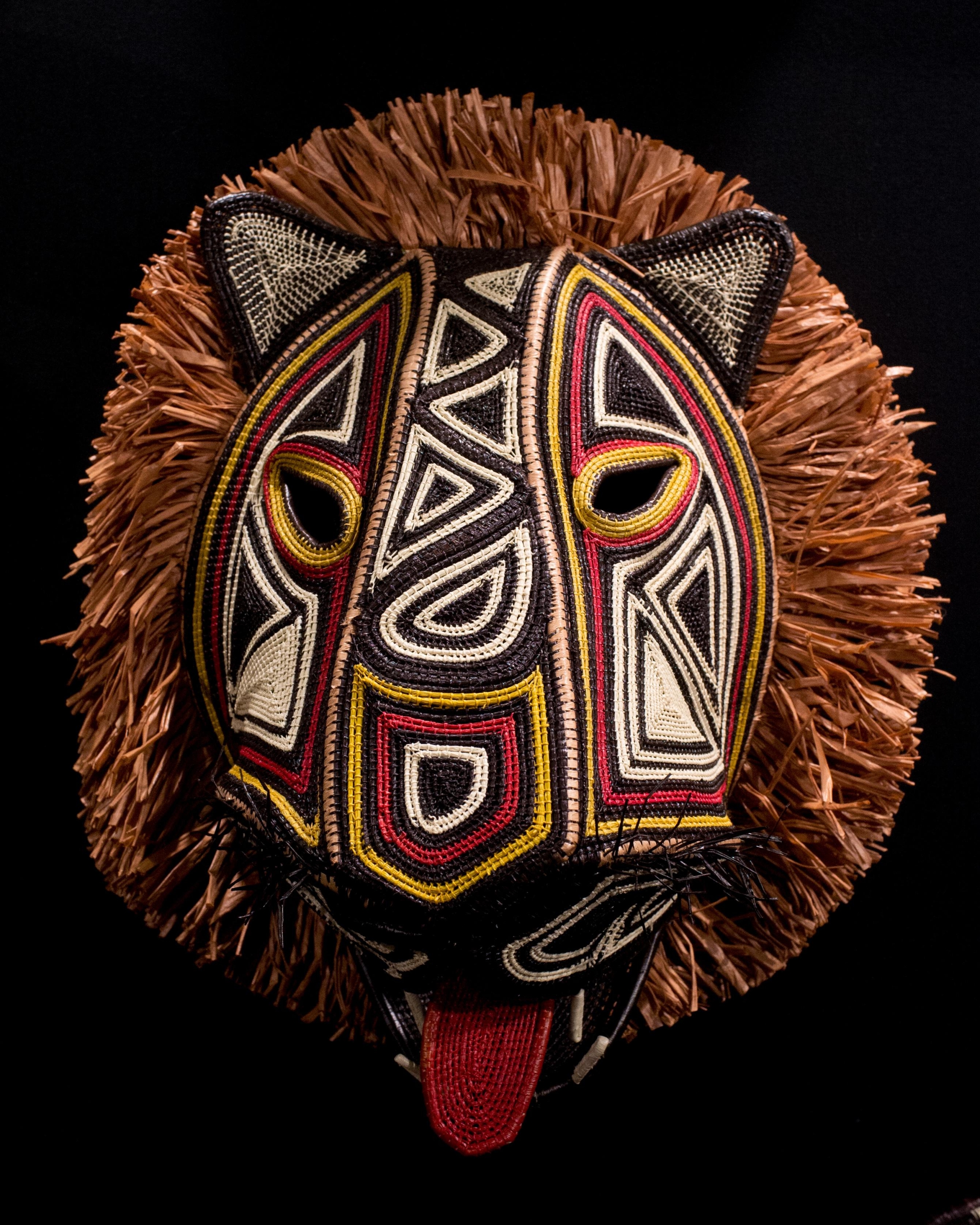
The traditional motifs found on the masks also appear in Emberá body painting, used during rituals and celebrations. They form a visual language shaped by geometric forms and representations inspired by the natural world.
But this language is not fixed. Each artist reinterprets it and, little by little, develops her own visual expression.
This is where the true reinvention takes place.
The aim is not to reproduce exactly the animal observed in the forest. Some artists even create animals that do not belong to the fauna of the Darién, but are instead spiritual beings.
These artists create for us objects suspended between the world of the forest and the world of spirits.
From Fibre to Sculpture
This transformation also takes place through the material itself.
Plant fibres gathered from the surrounding environment are prepared, dyed and patiently worked to give birth to singular works. A material from the plant world becomes a volume, a spirit, an animal.
Each of these wall sculptures carries the particular vision of the woman who created it.