
BACO
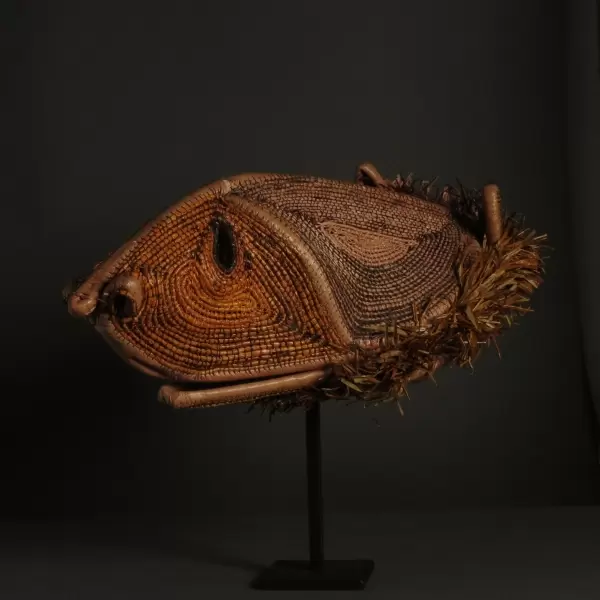
An enigmatic and protective feline presence.
Entirely handwoven and embroidered from natural fibres, this mask plays with a geometry of lines and contrasting earth and ivory tones.
Its deep gaze evokes the silent strength of the animal world and the spiritual dimension of forest traditions, where the feline holds a particular place in the shamanic universe as a symbol of power, protection and connection with the invisible world.
This unique piece can also serve as a wall decoration or be placed on a piece of furniture with or without a base (not supplied).
- Each artisan receives directly and immediately remuneration for her work, at a fair price.
- The masks all receive a phytosanitary treatment to eliminate all insect larvae.
- The dyes used are always natural and made from plants.
Les masques et le monde invisible
Extraordinaires par leur valeur artistique et décorative, ces masques trouvent leur origine dans les croyances chamaniques et les rituels des peuples autochtones Wounaan et Emberá d’Amérique centrale.
Selon leurs croyances, le monde se divise en deux : le monde visible et un monde parallèle et invisible.
Les esprits invisibles, appelés « haï », sont présents dans la nature, les animaux et les plantes. « La grande supériorité de ce monde parallèle, de cet univers des ombres, est qu’ils peuvent voir l’homme alors que l’homme ne peut pas les voir », écrit Jean-Marie Le Clézio.
Par l’intermédiaire des chamans, les hommes peuvent entrer en contact avec les esprits « haï » de la nature.
Le masque, ou « nemboro », permet au chaman, au cours du rituel, de prendre l’apparence d’un esprit du monde invisible et d’entrer en communication avec celui-ci.
Après le rituel, le masque qui a « dansé » est détruit. Il reste en effet « chargé » de la présence de l’esprit et seul le chaman est autorisé à le toucher. C’est pourquoi aucun exemplaire ancien de ces masques rituels n’a été conservé.
Our masks are traditionally made for rituals.
They are made from palm leaves harvested from the forest, from a variety of palm called the Chunga. The softer parts are removed first. They are dried, bleached and wound into skeins.
The dried palm leaves are then dyed with natural dyes made from fruit pulp, wood chips, seeds, leaves or roots. They may need to be dipped several times in the dye.
After this long preparatory work, each craftswoman begins her fabulous creative work, which, alongside her great artistic sense, also requires the deep, incomparable know-how held only by the women of these tribes.
Our pieces are made from natural palm leaves dyed with vegetable dyes.
Masks should not be exposed to rain.
Likewise, direct exposure to the sun may cause the colors to fade.
Over the years the colors may lighten noticeably if your mask is exposed to direct sunlight.


Contact
¿Necesita más información, un presupuesto o quiere que trabajemos juntos? Escríbanos.